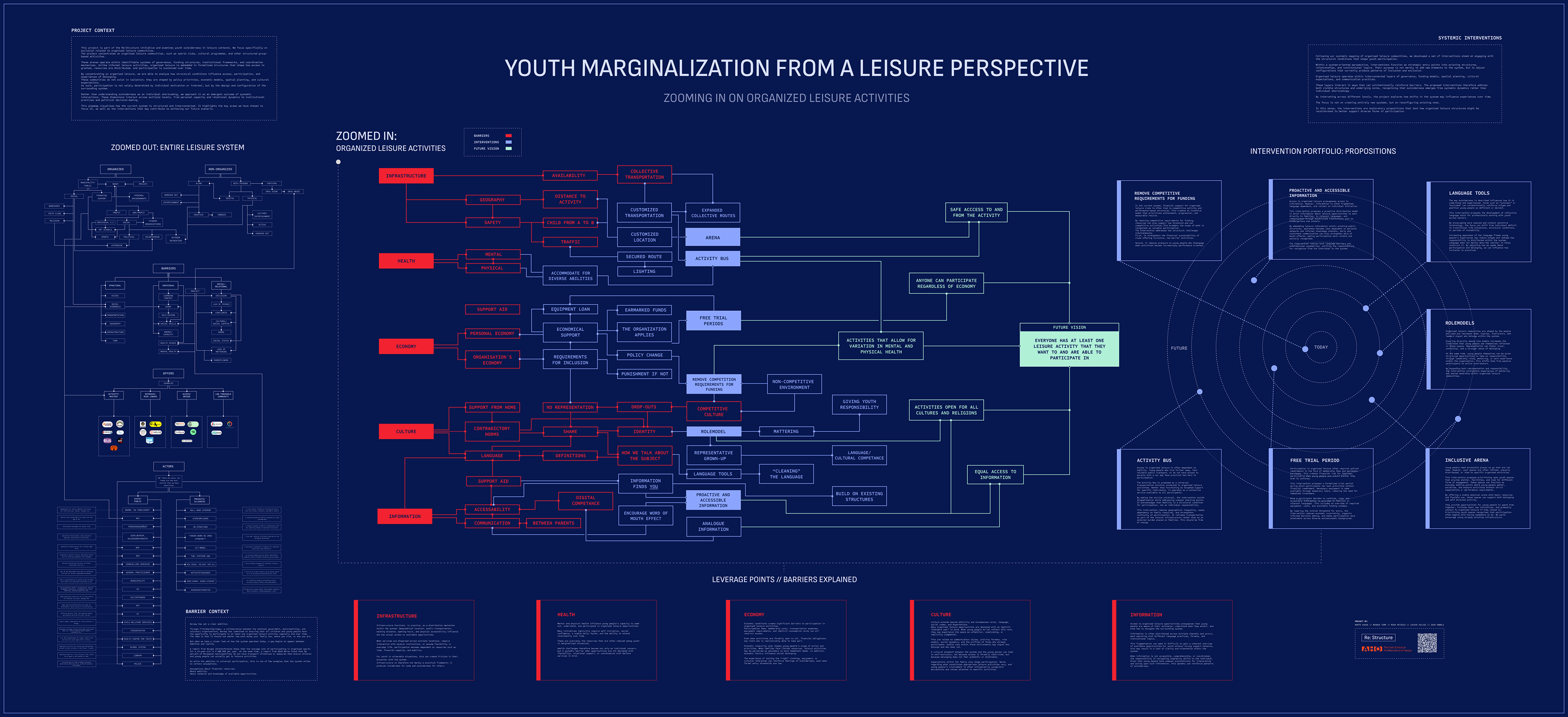
Gigamap of our findings about youth marginalization i leisure. The Gigamap includes zooming in on todays systems, barriers, leverage points, and guiding towards a future visuon and showing interventions.
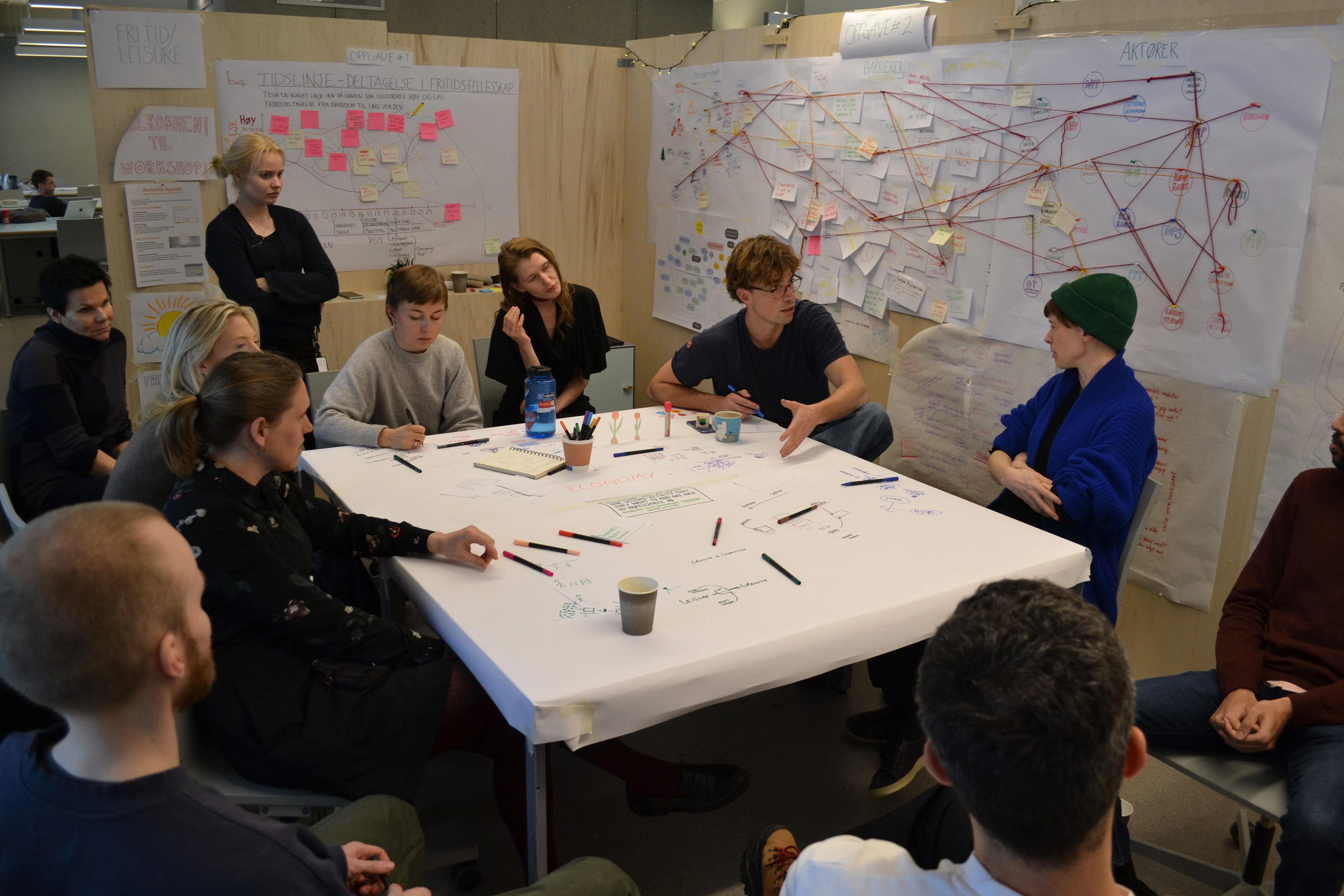
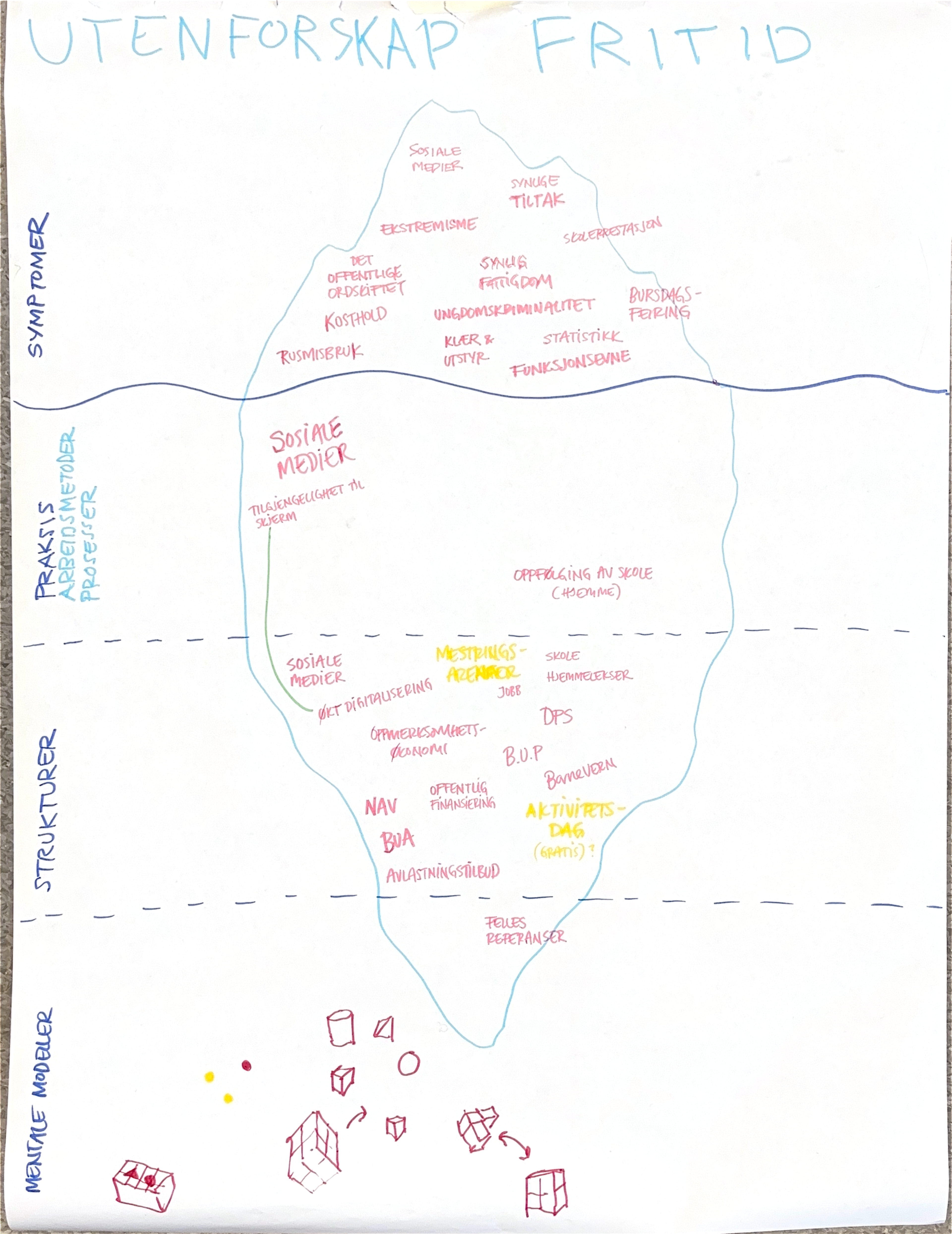
This project explores youth marginalization in leisure through a System Oriented Design approach. We began by building a broad understanding of leisure as both a social and structural system, investigating how participation is shaped by interconnected actors, institutions, and lived experiences. Through research, mapping, and workshops, we examined psychological, social, and structural dimensions of exclusion, including stigma, economic barriers, group dynamics, and unequal access to resources.
We mapped the ecosystem surrounding youth, identifying key actors across public, private, and voluntary sectors, and explored how these systems interact across different life stages. Through gigamapping, we synthesized insights into current systems, barriers, and leverage points, revealing how exclusion is produced not by individuals, but through systemic conditions.
Fieldwork with Tøyen Sportsklubb provided grounded insight into how low-threshold structures, local anchoring, and relational work can enable participation. These findings highlighted the importance of leisure as an arena for mastery, belonging, identity formation, and stability in everyday life.
The project moves from broad exploration to a focused investigation of barriers within organized leisure, identifying critical moments of dropout and systemic gaps. Based on this, we developed potential interventions targeting underlying structures such as access, recruitment, infrastructure, and cross-sector collaboration. In parallel, we articulated a future vision where all youth have access to at least one meaningful leisure activity they both want and are able to attend.
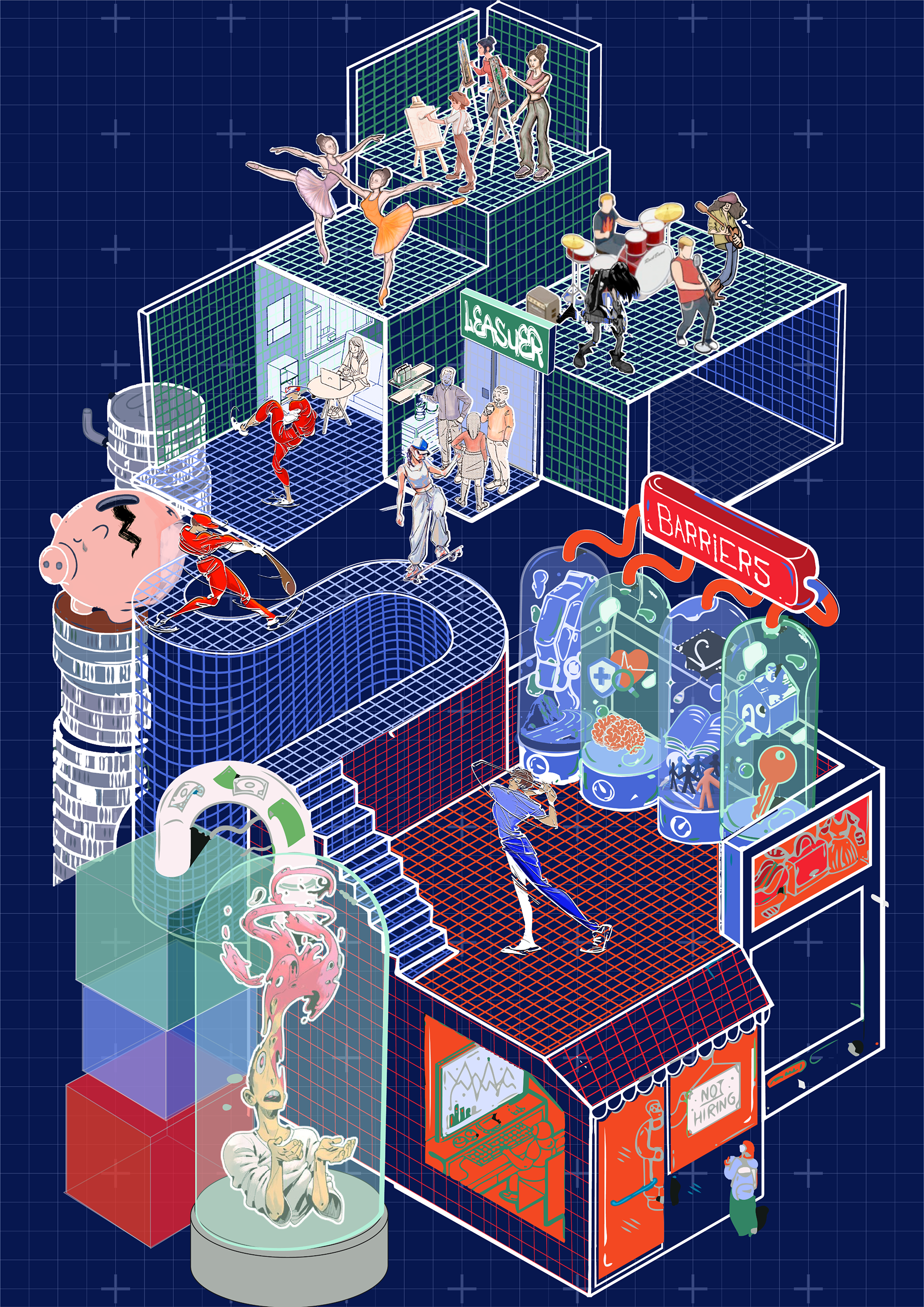
To communicate the complexity of the system, we developed a boundary object centered on the relationship between the individual and the system. The final concept materializes how structural conditions and personal circumstances interact, clash, and evolve, making systemic dynamics tangible and discussable.